
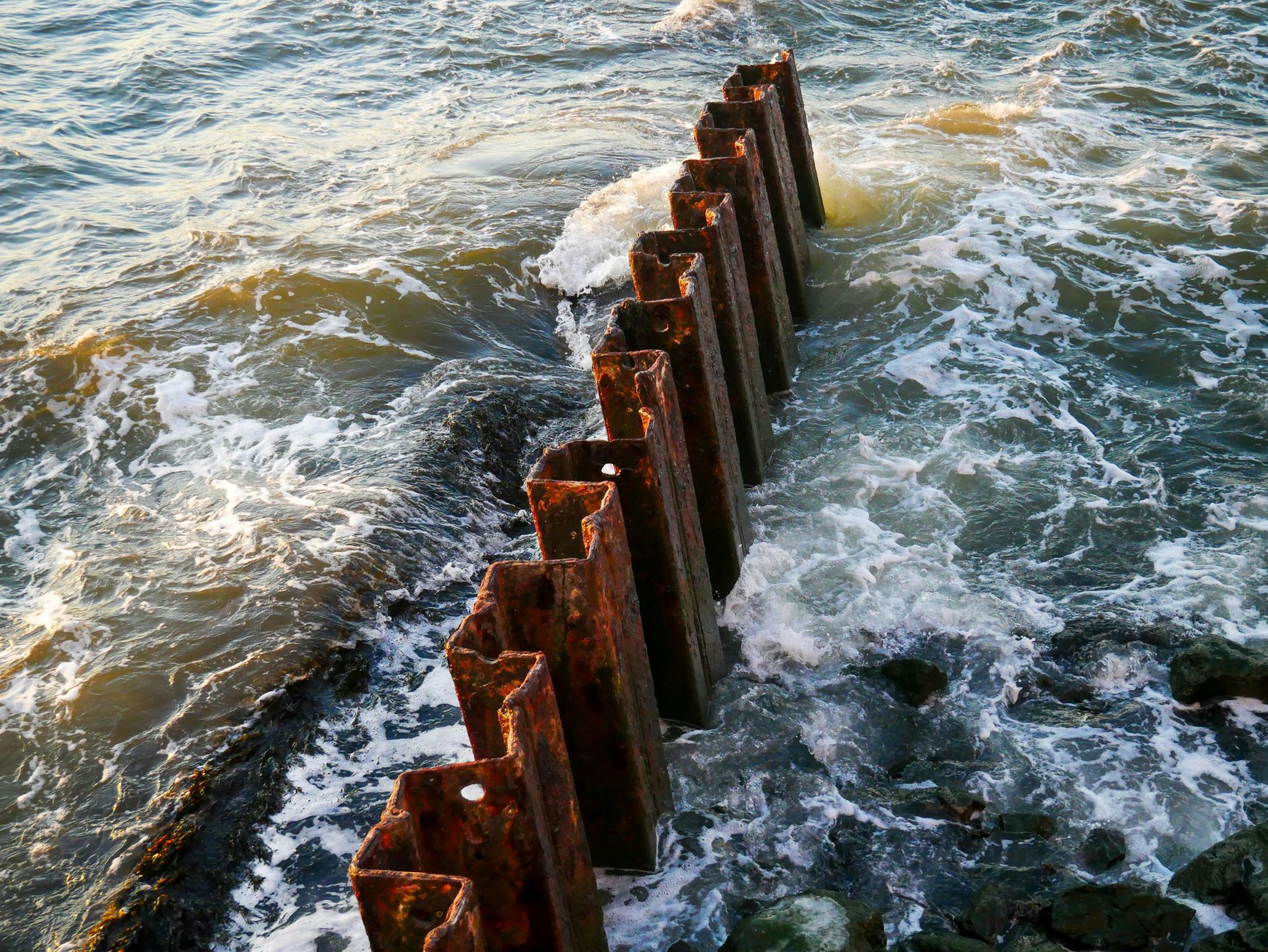
Why Coastal Rust Is Quietly Destroying Buildings
The Slow Violence Happening Inside Coastal Buildings
Rust rarely arrives with drama.
There is no cinematic cracking sound. No visible warning siren blinking above a beachfront apartment block. No dramatic moment where a building suddenly decides it has had enough of the ocean and collapses into a pile of regret and concrete dust.
Instead, corrosion behaves like a patient thief.
It enters quietly through microscopic openings, settles into steel reinforcement hidden deep inside concrete, and begins changing the chemistry of a structure from the inside out. Years pass. Paint fades. Railings discolor slightly. A tiny crack appears near a balcony edge. Most people ignore it because modern life trains humans to normalize deterioration until it starts shedding chunks onto parked cars.
Coastal environments are especially brutal because the ocean never stops working.
Salt particles travel through the air constantly. Wind carries chlorides onto buildings day after day, year after year, coating surfaces in an invisible film that slowly attacks exposed metals and penetrates porous construction materials. Unlike dramatic disasters, corrosion is repetitive. Relentless. It operates with the emotional energy of a printer that jams every morning at exactly 8:03 AM.
In South Africa, this problem is becoming increasingly important along coastal regions such as Durban, Cape Town, Gqeberha and East London, where residential and commercial developments continue expanding close to the shoreline. Developers market sea views and ocean proximity as luxury features, but the atmosphere near the coast is chemically aggressive in ways many property owners underestimate.
Buildings near the sea do not merely age faster.
They are chemically negotiated into decay.
Why Salt Air Is So Destructive
At first glance, salt air feels harmless.
People associate it with holidays, beach walks and expensive seafood restaurants where menus describe fish using emotionally unstable adjectives like “line-caught” and “velvety.” Yet marine air is one of the most corrosive natural environments for construction materials.
The problem starts with airborne chlorides.
Ocean waves generate microscopic salt particles that become suspended in the atmosphere. Wind then carries these particles inland, sometimes several kilometres from the coastline depending on local weather conditions and topography.
Once deposited onto buildings, the salt attracts moisture from the air. This creates thin electrolyte layers on metal surfaces, allowing electrochemical corrosion to begin.
Steel loves reacting with oxygen and water.
Human civilisation keeps trying to convince steel not to do this by painting it, galvanising it, coating it and embedding it in concrete. Steel still yearns for oxidation with the unstoppable determination of a raccoon attempting to open a municipal garbage bin at midnight.
When steel corrodes, iron oxide forms.
Rust occupies more volume than the original steel, which creates internal pressure. This expansion becomes especially dangerous inside reinforced concrete structures because the growing corrosion products force the surrounding concrete apart.
Eventually, cracks appear.
Then sections begin breaking away in a process called spalling.
By the time concrete starts falling from a structure, corrosion has usually been active for years beneath the surface.
The Hidden Vulnerability of Reinforced Concrete
Many people assume concrete buildings are naturally resistant to the coast because concrete appears solid and durable.
Concrete certainly looks emotionally stable.
But concrete is porous.
Tiny capillaries and microscopic voids inside the material allow moisture and chlorides to migrate inward over time. Reinforced concrete relies heavily on steel bars, commonly known as rebar, to provide tensile strength. While concrete handles compression extremely well, steel reinforcement allows structures to resist bending and tension forces.
Under normal conditions, concrete protects embedded steel through alkalinity.
The high pH environment creates a passive oxide layer around reinforcement, helping prevent corrosion. Coastal exposure gradually destroys this protection.
Chlorides penetrate the concrete cover and eventually reach the steel reinforcement. Once chloride concentration exceeds critical levels, the passive layer breaks down and corrosion begins.
This process is particularly dangerous because it remains invisible during early stages.
A building can appear structurally healthy while internal steel reinforcement is actively deteriorating.
This creates a strange architectural illusion where surfaces still project confidence while the skeleton underneath quietly dissolves like a forgotten shipwreck beneath shallow water.
How Corrosion Changes Structural Integrity
Rust is not merely cosmetic.
Many property owners treat corrosion as an appearance issue, something equivalent to faded paint or weather staining. Structural corrosion is far more serious because it directly affects load-bearing performance.
When steel corrodes, several problems occur simultaneously.
The cross-sectional area of reinforcement decreases, reducing strength. Bond strength between steel and concrete weakens. Expanding corrosion products crack surrounding concrete. Moisture ingress accelerates through these cracks, allowing even more chlorides and oxygen to enter.
This creates a feedback loop.
The structure essentially becomes better at damaging itself over time.
Balconies are especially vulnerable in coastal buildings because they experience repeated exposure to wind-driven rain, airborne salts and temperature changes. Corrosion in balcony reinforcement can eventually compromise structural safety, particularly in older apartment blocks where maintenance has been inconsistent.
Parking garages near the coast face similar challenges.
Vehicles bring additional chlorides into structures, especially in regions where road salts are used internationally. Combined with marine exposure, corrosion rates can accelerate significantly.
Steel-framed structures also face ongoing threats where coatings fail or maintenance lapses occur. Exposed steel elements such as staircases, railings, support beams and roofing systems require continuous protection to prevent deterioration.
The ocean does not care whether a structure won an architecture award.
Salt particles remain committed to their work with terrifying professionalism.
Why Coastal South Africa Faces Unique Risks
South Africa’s coastline creates diverse corrosion conditions depending on regional climate patterns.
Durban’s humid subtropical environment is especially aggressive because high humidity supports continuous electrolyte formation on surfaces. Warm temperatures also accelerate chemical reactions, increasing corrosion rates.
Cape Town presents different challenges.
Strong winds transport salt inland while winter rainfall increases moisture exposure. Buildings near the Atlantic Seaboard often experience severe corrosion due to direct ocean exposure combined with high-value property density and aging infrastructure.
The Eastern Cape faces additional complexities because industrial pollution can combine with marine exposure to intensify corrosion mechanisms. Sulphates and airborne contaminants may worsen deterioration in certain urban areas.
Many older coastal buildings were also constructed before modern corrosion-resistant design practices became widespread.
Developers decades ago often underestimated long-term chloride exposure. Concrete cover thicknesses may be insufficient by current standards, waterproofing systems may be outdated, and maintenance histories can be inconsistent.
This means numerous structures are aging simultaneously under harsh environmental conditions.
It becomes less a question of whether corrosion exists and more a question of how far it has progressed.
A building can stand proudly against the coastline while internally resembling a loaf of bread abandoned in a biology laboratory.
The Economic Cost of Corrosion
Corrosion is astonishingly expensive.
Globally, infrastructure corrosion costs trillions of dollars annually through repairs, maintenance, replacement and structural failures. Coastal property owners frequently underestimate how quickly these costs accumulate.
Minor corrosion repairs are relatively manageable when detected early.
Once reinforcement damage becomes severe, rehabilitation costs rise dramatically. Concrete removal, steel replacement, cathodic protection systems and structural strengthening interventions can become financially overwhelming.
In apartment complexes, corrosion-related repairs often trigger disputes between body corporates, residents and developers regarding liability and maintenance responsibilities.
Insurance complications may also arise.
Neglected maintenance can invalidate certain claims, especially where visible deterioration existed long before failure occurred.
Tourism infrastructure faces additional pressure because appearance matters commercially. Hotels, beachfront restaurants and holiday apartments cannot easily hide corrosion damage from visitors. Rust staining, cracked concrete and deteriorated façades directly affect market perception.
There is also the hidden cost of deferred maintenance.
Owners sometimes postpone repairs because damage appears superficial. Corrosion then advances beneath visible surfaces, transforming relatively affordable maintenance into major structural rehabilitation years later.
This resembles ignoring a strange engine noise until the car eventually develops philosophical opinions about combustion and refuses to start.
Why Protective Coatings Matter So Much
Protective coatings serve as frontline defence systems in coastal environments.
Without coatings, exposed metals face direct contact with moisture, oxygen and chlorides. Proper coating systems interrupt this interaction by creating physical barriers.
Paint is not merely decoration in marine environments.
Industrial coating systems are carefully engineered chemical protections designed to resist corrosion under specific environmental conditions.
Epoxy coatings are commonly used because they provide strong adhesion and chemical resistance. Polyurethane topcoats offer UV stability and weather protection. Zinc-rich primers provide sacrificial corrosion protection by corroding preferentially before underlying steel.
Galvanising is another important strategy.
Hot-dip galvanised steel receives a protective zinc coating that significantly improves corrosion resistance. Even when scratched, surrounding zinc can continue protecting exposed steel through sacrificial action.
However, coatings are not permanent.
UV exposure, mechanical damage, poor application practices and inadequate surface preparation eventually compromise performance. Once coating integrity fails, corrosion often begins locally before spreading.
Maintenance intervals therefore become critical.
Coastal buildings require regular inspection and recoating programmes rather than reactive repairs after visible deterioration appears.
Unfortunately, many property owners treat coatings like a one-time vaccine against entropy.
The ocean disagrees.
Concrete Cover and Waterproofing Failures
Concrete cover refers to the thickness of concrete protecting embedded reinforcement.
Insufficient cover dramatically increases corrosion risk because chlorides reach steel more quickly. Older structures often lack adequate cover depths for aggressive coastal environments.
Cracks further accelerate chloride penetration.
Even tiny cracks provide pathways for moisture and salts to travel deeper into structures. Thermal movement, shrinkage, structural loading and poor workmanship can all contribute to cracking.
Waterproofing failures compound the problem.
Roof slabs, balconies and podium decks frequently experience membrane deterioration over time. Once waterproofing systems fail, moisture intrusion increases substantially.
Poor drainage also creates localised corrosion hotspots.
Standing water prolongs wetness cycles and encourages chloride accumulation. Blocked drainage outlets, incorrect falls and neglected maintenance can all intensify deterioration.
Many corrosion problems therefore begin with relatively ordinary maintenance issues.
A failed sealant joint.
A blocked drain.
A cracked balcony edge.
Tiny openings gradually become chemical invitation letters addressed directly to the ocean.
Why Stainless Steel Is Not Always “Rust Proof”
Many people assume stainless steel cannot corrode.
This is dangerously inaccurate.
Stainless steel resists corrosion because chromium forms a passive oxide layer on the surface. Under certain conditions, especially chloride-rich coastal environments, this passive layer can break down.
Pitting corrosion is particularly concerning.
Tiny localised pits form on stainless steel surfaces and may penetrate deeply while remaining visually subtle. Marine-grade stainless steels perform better than standard grades, but material selection remains critical.
Incorrect stainless steel specification is a common problem in coastal construction.
Lower-grade stainless steels may initially appear acceptable but deteriorate prematurely under sustained chloride exposure.
Fasteners are another major vulnerability.
Even if primary structural elements resist corrosion, bolts, brackets and connectors may fail if incompatible metals or unsuitable grades are used.
Corrosion between dissimilar metals can also occur through galvanic action.
When two different metals contact each other in the presence of an electrolyte, one corrodes preferentially. Coastal moisture provides ideal conditions for these reactions.
Buildings near the ocean therefore require extremely careful material coordination.
Otherwise structures become accidental electrochemical experiments conducted by humidity and time.
Architectural Design Can Increase Corrosion Risk
Some buildings practically invite corrosion.
Poor architectural detailing often traps moisture, encourages salt accumulation or prevents proper drainage. Complex façades with horizontal ledges and decorative projections may look visually impressive while quietly collecting water and contaminants.
Minimal overhangs expose façades directly to wind-driven rain.
Poorly ventilated cavities retain moisture.
Inaccessible maintenance areas discourage inspection and repairs.
Modern coastal architecture sometimes prioritises aesthetics over long-term durability. Large exposed steel elements, minimalist detailing and extensive glazing systems can create maintenance challenges if environmental exposure is underestimated.
Design decisions affect maintenance requirements for decades.
A small detailing improvement during construction may prevent millions in future repair costs.
This reality creates tension between visual ambition and environmental practicality.
Architecture occasionally behaves like a person buying white shoes before walking through a muddy field while insisting everything will probably work out fine.
The Human Tendency to Ignore Slow Problems
Corrosion benefits from human psychology.
People respond strongly to immediate threats but often ignore gradual deterioration. A burst pipe creates urgency. A hairline crack near a balcony edge rarely inspires panic.
Because corrosion develops slowly, owners adapt visually to worsening conditions.
Rust stains become part of the scenery.
Peeling paint becomes background texture.
Spalling concrete transforms into “something we should probably look at eventually.”
This normalisation process is dangerous.
By the time visible symptoms become severe, internal damage may already be extensive.
Regular inspections therefore matter enormously in coastal environments. Structural engineers can identify early deterioration signs long before catastrophic failures occur.
Non-destructive testing methods such as half-cell potential testing, cover meter surveys and chloride analysis help assess corrosion risk and reinforcement condition.
Yet maintenance remains unpopular because prevention lacks emotional drama.
Nobody celebrates a building that successfully did not collapse this year.
Preventative maintenance is civilisation’s least glamorous superpower.
Climate Change Could Make Corrosion Worse
Climate change may intensify coastal corrosion challenges in several ways.
Higher temperatures accelerate chemical reactions, potentially increasing corrosion rates. Increased humidity and changing rainfall patterns may extend moisture exposure durations.
Sea level rise also threatens more infrastructure with direct marine exposure.
Storm intensity is another concern.
More severe coastal storms can increase salt deposition on structures while physically damaging protective systems.
Infrastructure designed decades ago may face environmental conditions beyond original assumptions.
This creates long-term resilience questions for coastal cities worldwide, including South African urban centres.
Engineers increasingly need to consider future environmental severity rather than relying solely on historical climate patterns.
The coastline itself is changing.
Buildings constructed for yesterday’s atmosphere may spend the next fifty years negotiating with a far angrier version of the ocean.
How Modern Engineering Tries to Fight Corrosion
Engineering has developed numerous strategies to reduce corrosion risks.
None are perfect individually.
Effective corrosion management relies on layered protection systems working together.
High-performance concrete mixes reduce permeability and slow chloride ingress. Supplementary cementitious materials such as fly ash and slag improve durability characteristics.
Corrosion inhibitors can be added to concrete to slow reinforcement deterioration.
Epoxy-coated reinforcement provides additional protection, although damage during handling remains a concern.
Cathodic protection systems actively counter corrosion through electrochemical methods. These systems are widely used in critical marine infrastructure such as bridges, ports and offshore structures.
Fibre-reinforced polymer reinforcement is also gaining interest because it does not corrode like steel. However, cost, design considerations and long-term performance factors still influence adoption.
Inspection technology continues improving as well.
Drones, thermal imaging and advanced sensor systems allow engineers to monitor structures more effectively.
Some modern buildings now incorporate corrosion monitoring systems directly into construction, essentially giving structures nervous systems capable of reporting chemical distress before visible damage occurs.
The building becomes self-aware just enough to whisper, “Please fix the balcony before gravity becomes involved.”
Maintenance Is Not Optional Near the Coast
Coastal buildings require active stewardship.
Maintenance cannot be treated as occasional cosmetic upkeep because environmental exposure remains continuous.
Protective coatings must be inspected regularly.
Sealants need replacement.
Drainage systems require cleaning.
Concrete cracks should be repaired early before chlorides penetrate deeper into structures.
Routine washing of exposed surfaces can even help reduce salt accumulation in highly aggressive environments.
Property owners often underestimate how maintenance frequency changes near the coast compared with inland environments.
Materials simply deteriorate faster.
This reality affects lifecycle costing significantly.
Cheap construction decisions may become extraordinarily expensive over decades of marine exposure.
Well-maintained coastal buildings can survive successfully for generations. Neglected structures may experience severe deterioration surprisingly quickly.
The difference often comes down to consistency.
Corrosion thrives in neglected intervals.
The Future of Coastal Construction
Coastal development will continue expanding because humans remain deeply committed to living near large bodies of water despite centuries of evidence suggesting the ocean is fundamentally unpredictable.
Future coastal construction will likely rely more heavily on durability-focused design philosophies.
Material science will play an increasingly important role. Advanced coatings, self-healing concrete technologies and corrosion-resistant reinforcement systems may improve long-term resilience.
Regulations are also evolving.
Building standards increasingly recognise aggressive marine exposure classifications and require stricter durability measures.
Developers may eventually face stronger pressure to consider whole-life durability rather than only initial construction cost.
This shift is important because corrosion is ultimately a time problem.
Structures are not judged only by how they look on completion day. They are judged by how they survive decades of chemistry, weather and human neglect.
The coast never stops testing buildings.
Every gust of salty wind is effectively a tiny inspection notice delivered by the atmosphere itself.
Rust Is More Than Surface Damage
Rust carries a strange reputation problem.
People associate it with abandoned cars, old fences and neglected machinery. In reality, corrosion is one of the most important structural durability challenges in modern construction.
Especially near the coast.
What makes corrosion dangerous is not merely its ability to damage materials, but its ability to remain hidden while doing so.
A building can appear stable while internal reinforcement quietly weakens.
Concrete can look permanent while microscopic chloride ions continue migrating deeper into its structure.
Steel can seem solid while electrochemical reactions steadily consume it atom by atom.
This is why coastal maintenance matters.
Not because buildings should remain aesthetically perfect, but because structural durability depends on constant intervention against environmental forces that never truly stop working.
The ocean is patient.
Salt is patient.
Rust is patient.
And chemistry, unlike humans, never gets distracted halfway through the job because somebody sent a notification or because a pigeon outside suddenly looked unusually judgmental.