
Smarter electrical monitoring: what connected devices can and cannot tell property owners
Smarter electrical monitoring: what connected devices can and cannot tell property owners
A building's electrical needs can change without an obvious change in the building itself. A business adds equipment, a household establishes a home office or a property manager wants to understand which systems operate after hours. Connected meters and monitoring devices promise more information about these patterns, but the value depends on what is measured, how the data is interpreted and whether the installation is suitable for the device.
An electricity bill provides an overall picture for a billing period. A properly selected monitoring system may provide a more detailed view of consumption over time or of selected parts of an installation. That detail can help an owner ask better questions about operating hours and unexpected changes. It does not, on its own, identify every electrical fault, prove compliance or guarantee lower costs.
For Durban property owners considering electrical installations and repairs, the useful starting point is the decision they want the information to support. Monitoring a shared building to understand after-hours consumption is different from investigating a tripping circuit or planning a new piece of equipment. The selection, installation and interpretation should match that purpose and be handled by appropriately qualified professionals.
What has changed in monitoring technology
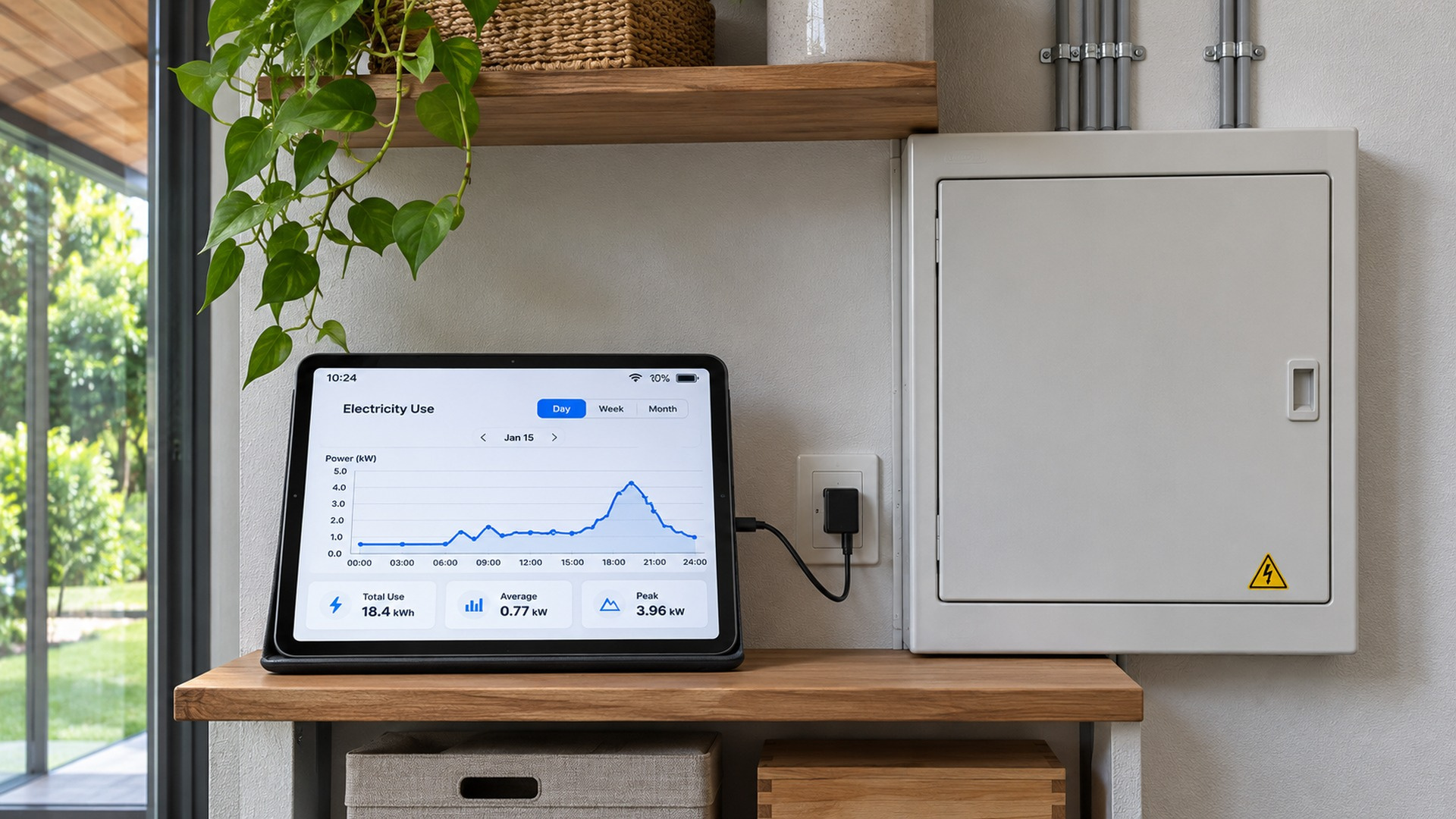
Digital devices can record and present electrical information at intervals rather than relying solely on a periodic manual reading. Depending on their design, some provide a local display, while others send readings to software or a communications gateway. A user may be able to view patterns by time of day or compare readings across selected metered areas. Capabilities vary significantly between products.
A device may show energy use, instantaneous power or other measurements, but these are not interchangeable. Energy is usage accumulated over time; power is the rate at which electricity is being used at a particular moment. A graph of one does not automatically explain the other. The supplier or electrical professional should explain which measurements the proposed system provides and what they mean for the property.
Connected monitoring can also change how information reaches the person responsible for a building. A facilities manager might review a dashboard rather than visit a meter for each reading. That convenience depends on correct installation, a working communications path and suitable permissions. If connectivity fails, ask whether readings are stored locally, whether data is lost and how the user will know the device is offline.
A monitoring product is not inherently more useful simply because it connects to an app. A basic meter with a dependable reading and an assigned review process can answer some questions. More detailed monitoring can be worthwhile when the owner has a defined use for the information and understands the cost of installation, software and ongoing support.
Begin with a decision, not a dashboard
Before selecting a product, identify what you need to know. A business might want to understand whether equipment remains on after closing. A landlord may want to understand how a shared service area is used. A household might want to compare patterns before and after a change in routine. These are different questions and may require different metering arrangements.
Describe the area or equipment to be measured, the period over which the information is needed and who will review the results. If the question concerns a particular piece of fixed equipment, a whole-building total may not isolate it. If the goal is an overall consumption trend, detailed monitoring of every circuit may introduce unnecessary complexity and expense.
It is also important to separate monitoring from fault diagnosis. A graph may show a change at a certain time, but it cannot establish the cause without context. A higher reading could reflect longer operating hours, new equipment or a change in occupancy. An electrical fault is only one possibility. A registered electrical professional should investigate any suspected installation problem using appropriate methods.
Ask the provider to show the type of information the proposed product actually supplies. Check whether the user can export readings, how long records are retained and whether there is an ongoing subscription. A demonstration should make clear which features are included in the quoted product and which depend on additional equipment or services.
Choose the correct location for a meter
Where a device is installed determines what it can measure. A meter at a single point may capture combined use downstream of that point, but it cannot automatically distinguish every appliance or tenant. A meter dedicated to a particular circuit or area can answer a more focused question, provided the installation is suitable and the measurement arrangements are correctly designed.
The electrical professional should examine the existing distribution arrangement and identify a safe, appropriate method of installation. Some devices use sensors associated with conductors, and others use different arrangements. The selection must match the system and manufacturer requirements. Owners should not remove board covers or attach sensors inside a distribution board themselves.
Access, labelling and future maintenance should also be considered. A device that cannot be safely reached or identified may be difficult to maintain. If a meter serves a shared area, record what it covers and who is responsible for reviewing and paying for the associated service. A useful label and a short description can prevent confusion after staff or tenants change.
Where monitoring affects multiple tenants or a billing arrangement, agree on the intended use and responsibilities before work begins. A device used for operational insight should not automatically be treated as a revenue-grade billing meter. If readings are to be used for allocation or charging, obtain advice on the applicable technical, contractual and legal requirements.
Understand what a reading can reveal
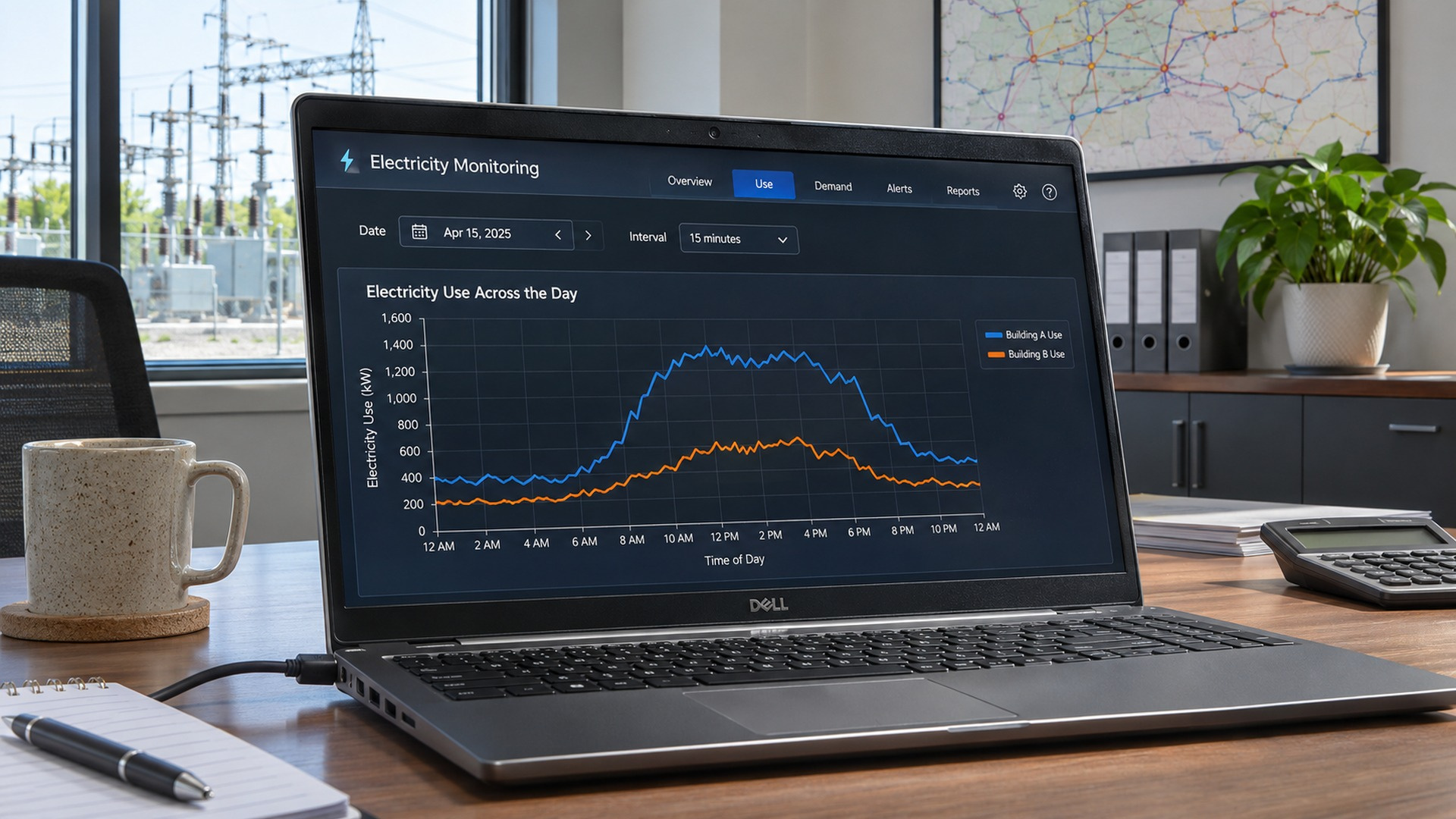
The most useful feature of a monitoring system may be the ability to compare a property with its own history. A manager can review a normal operating week, note known changes and investigate a sustained difference. A sudden increase is a prompt for questions, not a diagnosis.
Start with the context around the change. Was the building occupied for longer? Was new equipment installed? Did cleaning or security activities change? Was a reading missing or estimated? A sound comparison considers time periods and conditions that are reasonably similar. The professional or energy adviser can explain the limitations of the data.
Monitoring can help verify whether an agreed operational change had the expected effect, but results should be described carefully. A reduction after one change does not prove that the change caused all of it if occupancy or operating hours also shifted. Avoid promising a percentage saving before the building, equipment and costs have been assessed.
A system should also support follow-up. If an alert is issued, identify who receives it, what it means and when a professional should be called. An unreviewed notification does not resolve a problem. Excessive alerts can also be ignored, so thresholds and responsibilities should be practical for the property.
Technology does not replace safe electrical work
Adding monitoring equipment can involve work on an electrical installation. In South Africa, the Electrical Installation Regulations set out requirements concerning registered electrical contractors, registered persons and certificates of compliance. The requirements for a particular device and installation should be assessed by the responsible registered professional.
The Department of Employment and Labour advises owners and businesses to engage competent, legally registered contractors and stresses the importance of inspection and testing before certification where required. Its notice on electrical compliance is a useful reminder that paperwork and the underlying work must be considered together.
Ask who will install the device, what registration and competence they have for the work, and what documentation will be provided. If the monitoring supplier and the electrical contractor are different businesses, clarify the boundary between their responsibilities. The owner should not be left to coordinate live electrical work between an app provider and a general maintenance worker.
A monitoring device does not make an unsafe installation safe. If the assessment identifies a defect, the professional should explain the required response separately from the optional monitoring system. Do not treat the purchase of a new device as a substitute for rectifying an identified problem.
Check communications, security and data access
A connected system can be useful only if the people responsible can access the information when needed. Ask whether it uses the property's network, mobile communications or another connection. Find out who provides that connection, what happens during an outage and whether the device can be maintained if the original supplier is no longer available.
Consider who can view or change settings. A small business may need one person to receive reports and another to administer accounts. A multi-tenant property may need clear boundaries around data access. Use appropriate account controls and ask how access is removed when an employee or service provider leaves.
Check how data is retained and exported. If the property changes managers, can the historical information be transferred in a useful format? Are there fees for access? Does the owner retain access if a subscription ends? The answers matter because the value of monitoring often comes from comparison over time.
Any system connected to a network requires appropriate security management. Ask the supplier about software updates, account protection and the support period for the device. Avoid assuming that connectivity is risk-free or that a product will be supported indefinitely. The right arrangements depend on the organisation and its information-security requirements.
Compare installation options and costs
A quotation should identify the monitoring device, what it measures, where it will be installed and the electrical work required. It should also explain whether communications equipment, commissioning, software access and user training are included. A low equipment price may not reflect the total cost of a working system.
Ask whether there are recurring fees for connectivity, dashboards, support or data storage. If the product has optional features, distinguish those from the base service. Request a description of what happens when a component fails and who will respond. For a business, the continuity of reporting may be as important as the initial installation.
The expected benefit should be expressed as a decision the owner can make, not a guaranteed saving. For example, the owner may be able to identify whether an area remains active overnight and then investigate the reason. The outcome depends on what is found and whether any change is appropriate. Monitoring adds evidence; it does not automatically change how a property operates.
Before proceeding, compare the proposed solution with simpler options. An owner who only needs a periodic whole-property reading may not need a detailed system. Conversely, a complex site with several distinct uses may find a single total insufficient. The professional's role is to explain the trade-offs rather than present one product as suitable for every building.
Plan a meaningful handover
A completed installation should leave the owner with more than a login. Request a record of the device, its location, what it measures and the person responsible for support. Keep manufacturer instructions, relevant electrical documentation and account information in a secure, accessible place. Do not store passwords in an unsecured maintenance file.
Agree on how the readings will be reviewed. A simple monthly review may be suitable for one property; another may need more frequent attention during commissioning. Record known changes in occupancy or equipment so that later comparisons have context. If a result seems unusual, arrange an appropriate investigation rather than making unverified claims about the cause.
The responsible person should understand the difference between a monitoring alert and an emergency. A suspected electrical hazard requires a safe response and professional attention, not a dashboard adjustment. Keep people away from unsafe equipment and do not attempt repairs without the appropriate competence.
A well-planned system can make electrical use easier to understand and help an owner brief a professional more effectively. Its value comes from a clear question, suitable installation and an ongoing process for acting on the information.
To discuss an electrical assessment or a monitoring-related installation, contact Construction Durban with the property location, intended purpose and any available installation records. The team can review the request and advise on the next step.