Safe Demolition Planning for Renovation Projects in Durban
Planning Safe Demolition of Old Structures in Durban
Renovation projects in Durban often begin with the careful removal of ageing structural elements. Before new finishes, modern layouts, or improved living spaces can emerge, there must first be space created safely and deliberately. In construction practice, demolition is never simply about tearing down old walls. It is a controlled engineering process that protects people, neighbouring properties, and the structural integrity of areas that will remain.
In many parts of South Africa, especially in coastal urban centres, older homes and commercial buildings were constructed using materials and techniques that may not meet modern safety expectations. Renovation therefore starts with understanding what must be removed, what must be preserved, and how the removal should happen without destabilising the structure as a whole.
Planning safe demolition is essentially about choreography rather than destruction. Each movement of the process must follow a logical sequence, allowing the building to release internal stresses gradually. Rushing demolition work or using inappropriate removal methods can trigger cracking, collapse risk, or damage to neighbouring foundations. In Durban’s dense residential and commercial zones, such risks carry significant financial and safety consequences.
Structural removal should always be treated as a technical preparation stage for renovation rather than an isolated construction activity. When homeowners or developers approach demolition with this mindset, the entire project tends to progress more smoothly, with fewer unexpected complications and better cost control.
Why Structural Assessment Matters Before Removal Begins
Structural assessment is the foundation of safe demolition planning. Old buildings often contain hidden weaknesses that are invisible to untrained eyes. Years of exposure to moisture, thermal movement, and material fatigue can gradually weaken load paths inside walls and roofs.
Professional structural engineers use inspection methods that reveal stress distribution across major components. They examine cracking patterns, settlement signs, and load transfer behaviour within beams and columns. In coastal cities like Durban, the assessment process must also consider salt-laden air and humidity effects, which accelerate corrosion in reinforcement steel.
Many renovation projects fail because demolition begins before understanding structural dependency. For example, removing a wall that appears decorative may unintentionally eliminate lateral support for roof trusses or upper floors. What looks like a simple partition could be quietly sharing the burden of structural loads.
Structural assessment usually starts with visual inspection followed by detailed testing where required. Engineers may take core samples, measure material strength, or use non-destructive scanning technology. These methods help determine whether elements should be reinforced, partially removed, or fully dismantled.
Property owners sometimes underestimate the value of this step, believing that experienced contractors can “sense” structural safety during demolition. While skilled workers are valuable, demolition planning should always rely on measurable engineering data rather than intuition alone.
The Role of Local Building Conditions in Durban
The coastal environment of Durban introduces unique challenges for construction maintenance and demolition preparation. Warm temperatures combined with high humidity create ideal conditions for material degradation over time.
Salt carried by sea air slowly infiltrates porous construction materials. Reinforced concrete structures may develop corrosion around steel bars, causing internal expansion pressures that eventually produce surface cracking. During demolition planning, these hidden corrosion zones must be considered because weakened materials behave unpredictably when mechanical forces are applied.
Older residential suburbs in Durban often feature structures built several decades ago when material standards and protective coatings were less advanced. Some buildings may have been constructed before modern corrosion-resistant reinforcement practices became widespread in South Africa.
Rainfall patterns also influence demolition safety. Sudden coastal storms can saturate soil surrounding foundations, reducing ground stability during removal operations. If excavation is required as part of renovation, temporary drainage management becomes essential.
Construction professionals working in Durban frequently schedule demolition during periods of stable weather. While it is impossible to eliminate environmental uncertainty, monitoring short-term weather forecasts helps reduce operational risk.
Humidity can also affect dust dispersion during demolition. High moisture levels may cause airborne particles to settle more quickly, which can be beneficial for environmental control but may also create slippery work surfaces. Workers must therefore maintain clean site pathways and proper protective equipment.
Identifying Load-Bearing Components in Old Structures
One of the most critical aspects of demolition planning is distinguishing between load-bearing and non-load-bearing components. This distinction determines which parts of the structure can be safely removed without compromising overall stability.
Load-bearing walls transfer vertical loads from roofs and upper floors down to foundations. Removing these walls without providing temporary or permanent support can trigger progressive structural collapse. Unfortunately, visual appearance alone does not reliably indicate load-bearing function.
Older buildings in Durban sometimes underwent informal modifications over the years. Previous owners may have added doorways, internal partitions, or extensions without professional structural approval. Such modifications can obscure original load paths.
Engineers often inspect ceiling framing directions, foundation alignments, and beam positioning to determine structural roles. The pattern of floor joists, for example, usually reveals which walls are supporting loads because joists typically run perpendicular to load-bearing supports.
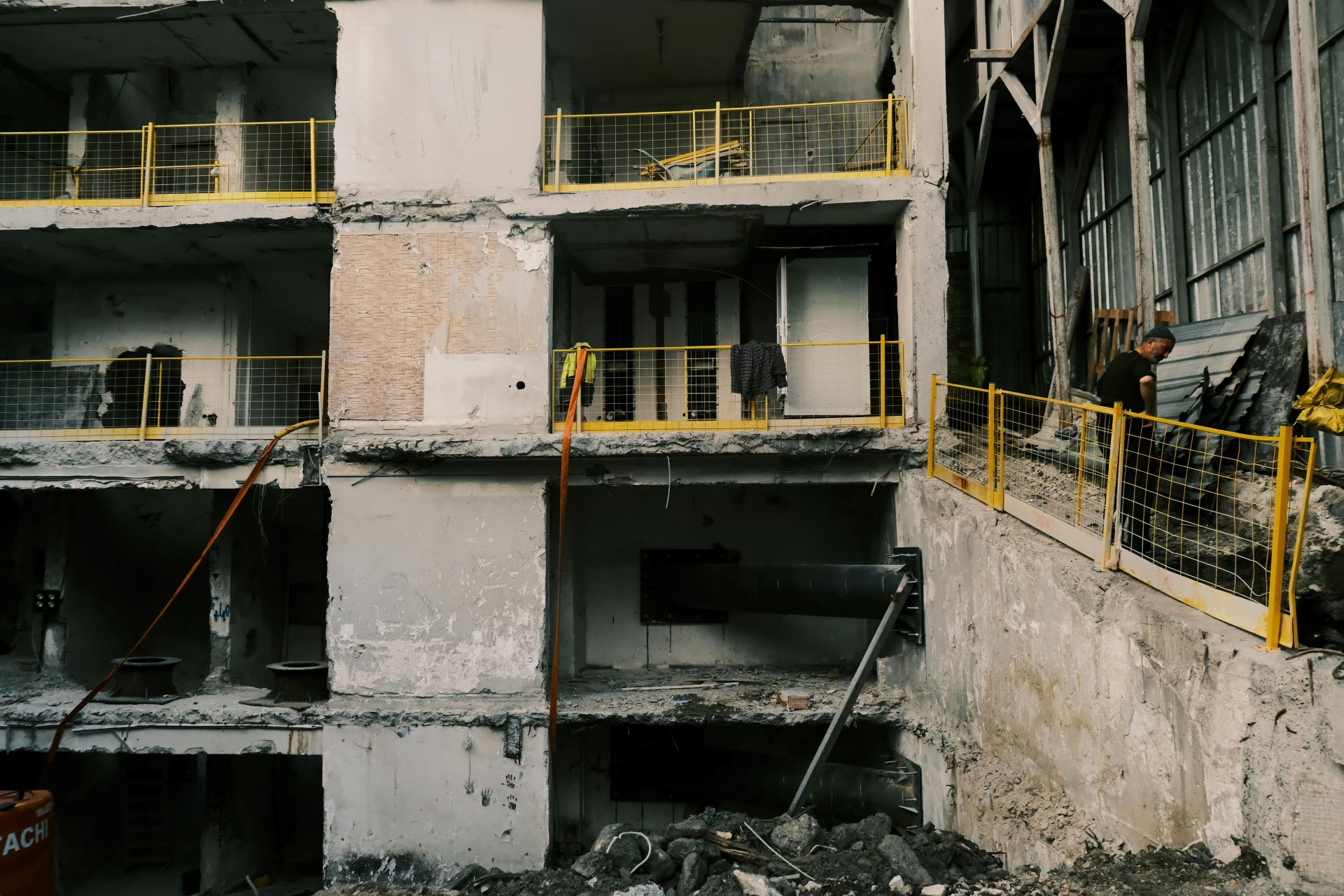
If demolition must remove a load-bearing wall, temporary shoring systems are installed first. These systems act like mechanical skeletons holding the building upright while permanent reinforcement is prepared.
Shoring may involve adjustable steel props, horizontal bracing beams, or scaffold-supported load transfer platforms. The choice depends on building height, material strength, and renovation design requirements.
Contractors working in coastal urban areas should never improvise shoring solutions. Temporary supports must be calculated using engineering load estimates rather than visual judgment.
Professional Inspection Methods for Safe Demolition Planning
Modern demolition preparation increasingly relies on advanced inspection technology. Non-destructive testing allows engineers to evaluate structural condition without damaging the building before removal begins.
Ultrasonic testing can reveal internal voids or cracks inside concrete members. Ground-penetrating radar may be used to map underground utilities or foundation reinforcement layouts. These tools are particularly valuable when renovating older properties in Durban where construction documentation may be incomplete.
Inspection teams also evaluate electrical, plumbing, and communication service routes inside the building. Accidentally cutting live utility lines during demolition can create safety hazards and service disruptions.
Moisture mapping is another useful technique. In coastal environments, hidden water infiltration zones can weaken plaster layers and structural joints. Identifying these zones helps contractors plan dust control and material removal sequences.
Professional inspection should be documented in written reports that include photographic records, measurement data, and risk assessments. These documents are valuable for project management, insurance evaluation, and regulatory compliance.
Homeowners sometimes view inspection costs as unnecessary project overhead. However, inspection expenses are usually far lower than the cost of repairing structural damage caused by poorly planned demolition.
Managing Hazardous Materials in Older Buildings
Older structures may contain materials that are now considered hazardous. One of the most common concerns is the presence of asbestos-containing products used in insulation, roofing sheets, or wall finishes during earlier construction periods.
Disturbing asbestos fibres during demolition can release microscopic particles into the air. Inhalation of these particles is associated with long-term respiratory health risks. Therefore, specialised removal procedures are required.
Professional hazardous material contractors typically isolate affected areas before removal. Workers use respirators, protective clothing, and sealed containment systems to prevent fibre dispersion.
Debris disposal must follow environmental and municipal guidelines in South Africa. Hazardous waste should be transported to licensed disposal facilities rather than mixed with general construction waste.
Lead-based paint may also be present in older coastal homes. Mechanical scraping of such surfaces without protective preparation can create toxic dust clouds. Chemical stripping or controlled enclosure methods are often preferred.
Homeowners planning renovations should request hazardous material screening during initial structural inspection stages. Early detection simplifies demolition scheduling and reduces unexpected project delays.
Designing a Controlled Demolition Strategy
Controlled demolition is about sequence, not force. The removal process should begin with non-structural elements such as interior fixtures, flooring layers, and lightweight partitions.
Roof components are often removed next because reducing overhead mass decreases pressure on supporting walls. However, roof removal must be conducted carefully to avoid sudden load redistribution.
Mechanical tools are usually preferred over impact-based destruction methods. Hydraulic breakers, precision cutting saws, and mechanical separation devices provide greater control.
In densely built areas of Durban, vibration management is particularly important. Excessive vibration can propagate through soil and affect neighbouring foundations.
Contractors sometimes install vibration monitoring sensors during demolition work. These sensors measure ground movement and trigger alerts if mechanical force exceeds safe thresholds.
Dust suppression systems are also essential. Water misting equipment helps reduce airborne particles but must be used carefully to avoid creating slippery surfaces or water accumulation near electrical equipment.
Demolition teams should work in clearly defined zones. Workers must understand which areas are active, which are restricted, and which are structurally sensitive.
Protecting Surrounding Properties in Dense Durban Areas
Urban construction sites rarely exist in isolation. Many renovation projects in Durban occur in neighbourhoods where homes stand close together.
Protective barriers should be installed along property boundaries before demolition begins. These barriers help contain debris, reduce noise transmission, and provide visual safety screening.
Neighbouring buildings may require structural monitoring if demolition involves large sections of masonry or concrete. This is especially relevant if the property shares party walls or foundation zones with adjacent structures.
Communication with surrounding residents is also part of professional demolition planning. Informing neighbours about project timelines, expected noise periods, and safety precautions builds community cooperation.
Traffic management may be necessary if construction vehicles must enter narrow residential streets. Temporary signage and spotter personnel help guide heavy machinery safely.
Night-time demolition work is usually avoided unless special municipal permission is granted. Daylight operations allow better visual inspection and safety supervision.
Working With Licensed Contractors and Engineers
Renovation demolition should always be executed by licensed professionals. Experienced contractors understand regulatory requirements and safety protocols relevant to construction activities in South Africa.
Engineering oversight ensures that structural modifications align with approved renovation designs. Unauthorised demolition work can lead to legal penalties, insurance complications, and future property value reductions.
Project agreements should clearly define responsibility boundaries between property owners, contractors, and engineering consultants.
Insurance coverage is another important consideration. Demolition work carries inherent risk, and adequate project insurance provides financial protection against accidental damage.
Workers must receive safety training that covers equipment operation, emergency response, and hazard recognition. Personal protective equipment should be mandatory on site.
Preparing for Renovation After Demolition
Once demolition is complete, the renovation journey truly begins. Site surfaces should be cleaned and inspected again before new construction materials are introduced.
Foundation areas may require strengthening if structural loads are changing due to renovation design. Engineers might recommend reinforcement beams, improved drainage systems, or moisture barriers.
In coastal environments such as Durban, moisture protection becomes particularly important during rebuilding stages. Proper waterproofing layers help protect new structures from long-term humidity exposure.
Renovation planning should integrate demolition knowledge rather than treating the two processes separately. The most successful construction projects are those where removal and rebuilding are designed as one continuous engineering story.
Future maintenance considerations should also be discussed before renovation construction begins. Accessibility for inspection, ventilation flow, and structural expansion tolerance are long-term performance factors.
Careful demolition planning is not about destruction. It is about clearing the stage so that new architectural possibilities can rise safely and confidently.
Safe demolition is the quiet guardian of successful renovation projects. In coastal construction environments such as Durban, structural assessment becomes even more critical because of environmental wear, humidity exposure, and urban density.
Renovation should never begin with forceful removal. Instead, it should start with knowledge, inspection, and engineering guidance. Controlled demolition protects people, property, and future construction quality.
When demolition planning is handled professionally, the old structure is not simply removed. It is respectfully transitioned, like turning an aging architectural page so that a stronger, safer, and more beautiful building story can begin.