
Property maintenance for coastal buildings: why a condition record is worth keeping
Property maintenance for coastal buildings: why a condition record is worth keeping
A coastal property faces a combination of routine wear and exposure to its surroundings. Doors are opened and closed, finishes are cleaned, fittings age and weather affects external surfaces. The exact effect varies with the building's location, materials, exposure and maintenance history. A property in Durban is not automatically subject to the same conditions as every other building in the area, but owners can benefit from recording what is actually happening on their site.
The value of ongoing maintenance is not a promise that a building will never need a major repair. It lies in having a clearer view of the property, responding to reported issues and planning work before avoidable uncertainty turns a small decision into an urgent one. A practical condition record gives owners, managers and contractors a shared starting point.
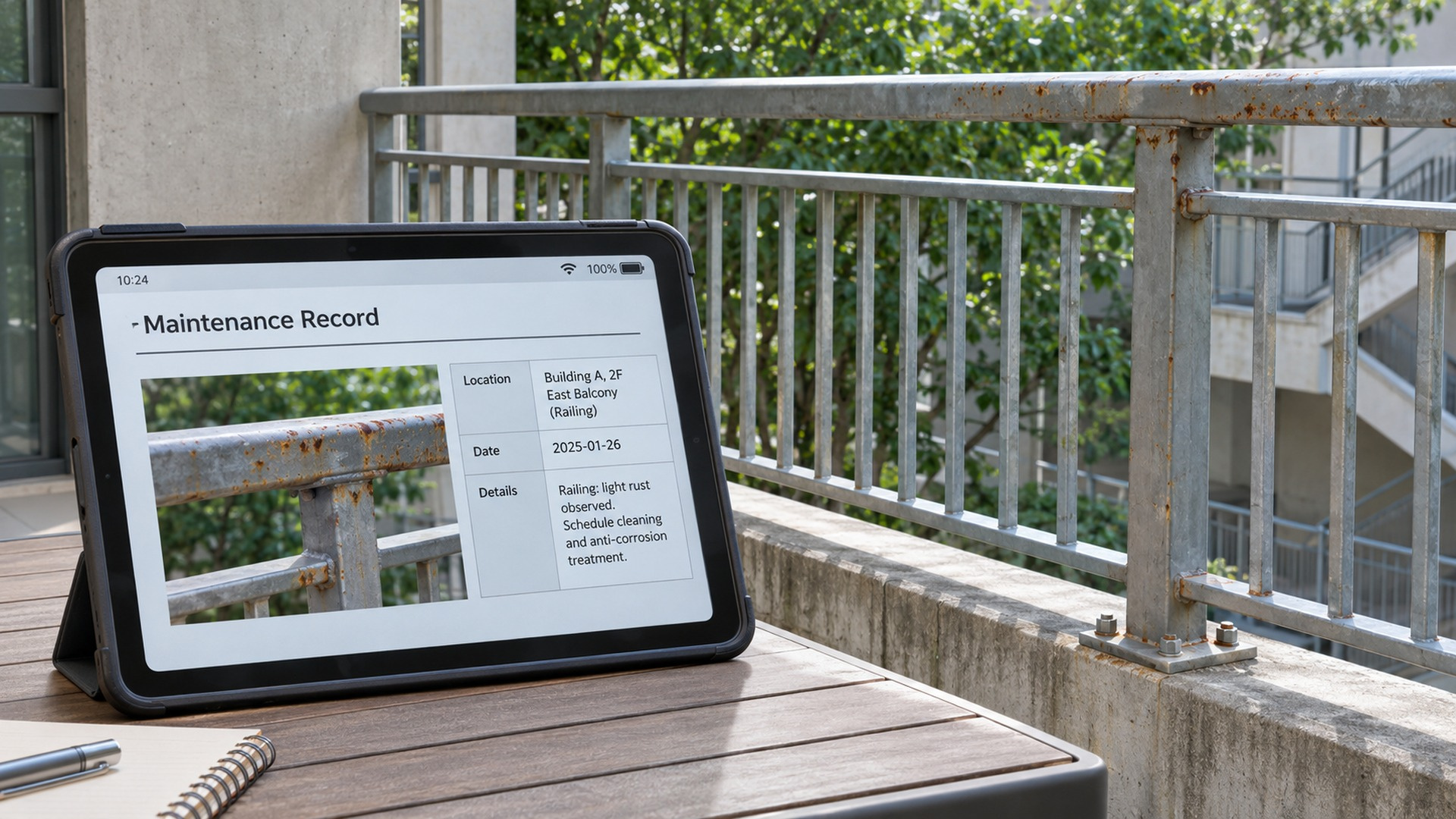
A useful record is more than a list of defects. It connects an observation with a location, date, action and responsible person. It also distinguishes an observed condition from an assumed cause. That distinction matters when, for example, a stain on a wall could be related to rain, a leaking service or a previous issue that has already been repaired.
The coastal setting is a reason to inspect, not a diagnosis
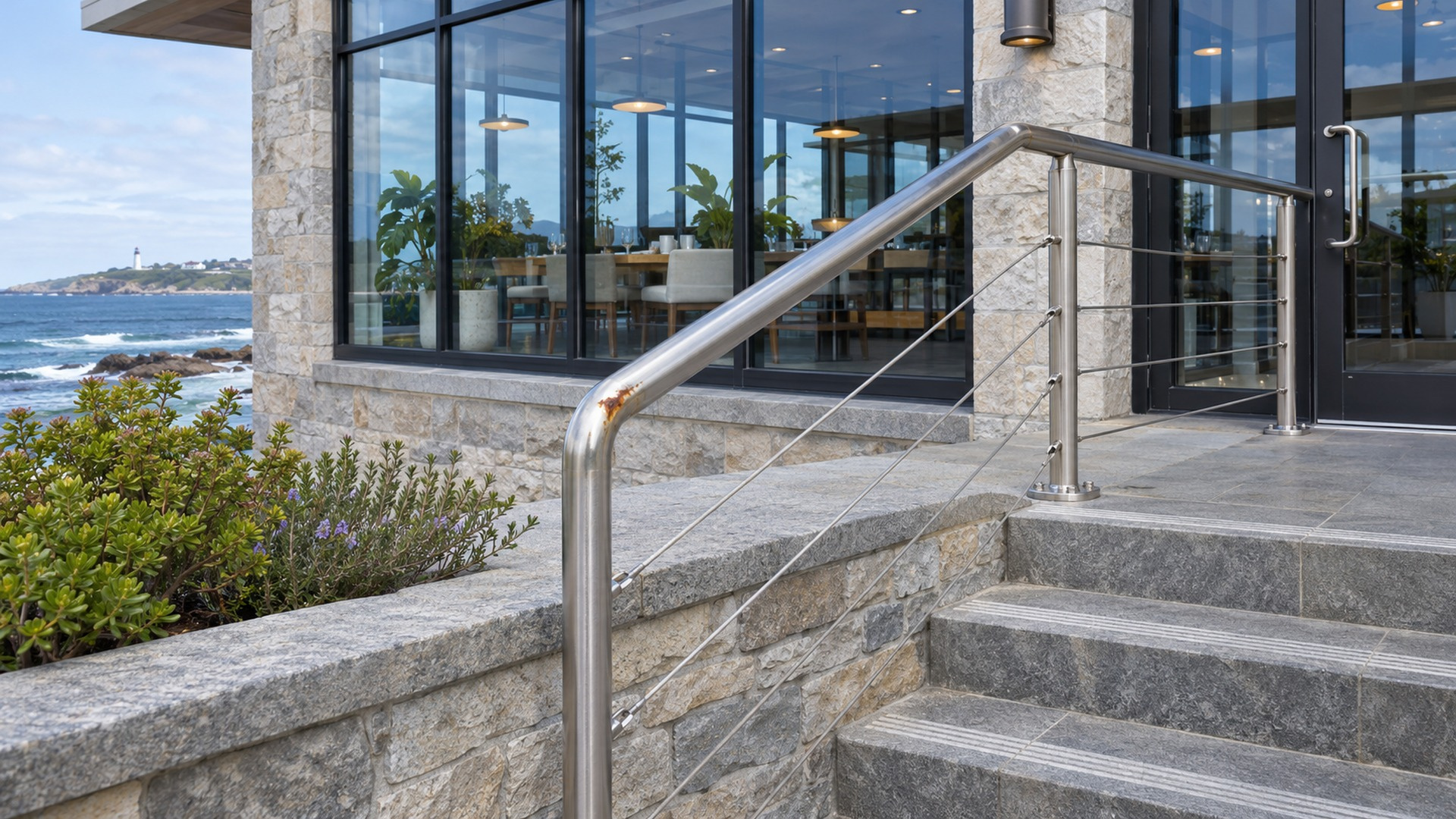
Proximity to the coast can influence the selection and care of exposed materials. Salt-laden air, humidity, wind and rain may affect external metalwork, coatings and building details. The degree of exposure differs with distance from the sea, shelter, elevation and orientation. A component facing the prevailing weather may age differently from an identical one in a protected courtyard.
Do not assume that every mark or discoloured fixing is evidence of a serious structural problem. Equally, do not dismiss visible deterioration simply because a building is near the ocean. Record the location and ask an appropriate professional to assess the condition, its cause and the significance for the component concerned.
A maintenance inspection can look at accessible and relevant areas such as gates, door hardware, external fastenings, painted surfaces and visible roof-edge details. The scope should be specific to the property. An elevated or inaccessible area may need specialist access equipment; it should not be inspected from an unsafe position simply to complete a checklist.
The choice of replacement materials and finishes should account for their intended environment and the manufacturer's instructions. A general label such as weather-resistant does not establish suitability for every coastal exposure. Ask the supplier or professional about preparation, compatibility, maintenance and the expected conditions of use.
Establish a baseline for the property
A baseline is a dated record of the building's condition at a particular point. It does not need to be an elaborate document for a small property, but it should identify the major areas and the issues that are visible or reported. For a larger building, a more structured survey may be appropriate.
Start with a simple site plan or a list of areas that everyone can recognise: entrance, north elevation, common passage, plant room or individual unit. Use consistent names so that future reports refer to the same place. Where a building has several floors or similar doors, add room numbers or another unambiguous identifier.
Photographs are most useful when they show the item and its context. Take a wider view to locate the area and a closer view of the condition where safe. Add the date and a short factual description such as paint flaking on the lower portion of an external door. Avoid recording a diagnosis unless a competent person has established one.
Record what could not be inspected as well as what was seen. A locked service room, concealed pipe or roof area requiring safe access may need a separate visit. A report that states these limitations helps the owner plan the next step without assuming that every hidden component has been checked.
Separate urgent issues from work that can be planned
A condition record becomes useful when it informs a decision. Each reported issue should be reviewed for potential safety consequences, risk of further damage, effect on occupancy and the need for specialist assessment. The priority must be based on the actual circumstances, not simply the order in which items were reported.
Some conditions require an immediate response. Water affecting electrical equipment, a visibly unstable element or a damaged access route may require people to be kept away and an appropriate professional to be contacted. Occupants should not touch wet electrical equipment, enter unsafe areas or attempt work for which they are not competent.
Other work may be scheduled after assessment. A finish that is worn but stable may be planned with other decorating work, while a repeatedly sticking door may need investigation before the cause and repair are known. Record who will obtain advice or a quotation, who can approve the work and when the item will be reviewed again.
If an owner chooses to defer an item, keep the reason and the next review date. Deferral can be a reasonable budget decision when the implications are understood. It should not cause the item to disappear from the record. If the condition changes or affects access, the priority may need to be reconsidered.
Treat door and access hardware as part of daily use
A door is a small component compared with the whole building, but it affects movement, security and the experience of occupants. Repeated reports that a door does not close, a handle is loose or a lock is difficult to use deserve a clear record. Similar symptoms can have different causes, including the hardware, the door leaf, the frame or movement affecting the opening.
The person reporting the issue should identify the door and describe what happens: whether it sticks throughout its movement, only catches at the latch or has visible loose hardware. A photograph can show the location and condition, but it cannot prove why a door is misaligned. A contractor should inspect the assembly before deciding whether adjustment, repair or replacement is appropriate.
Where a door forms part of a fire or other safety arrangement, its specification and required performance must not be compromised by an informal modification. Refer the issue to a competent professional and follow the applicable building and management requirements. Do not wedge a safety door open as a permanent solution to a closing problem.
Keeping the history of repeat repairs can prevent a cycle of brief improvements followed by the same complaint. Note what was done, who did it and whether the symptom returned. That information gives the next contractor a better starting point and helps the owner assess whether a broader investigation is justified.
Plan coating work around the substrate
Paint and other protective finishes contribute to appearance and can form part of a system for protecting a surface. Their performance depends on the condition and preparation of the substrate, product compatibility and exposure. Applying a fresh finish over loose material or an unresolved moisture problem may provide a short-lived cosmetic improvement.
A maintenance proposal should identify the affected areas, preparation method and intended product system. Ask how the contractor will address loose or damaged material and what will happen if more deterioration is discovered during preparation. For metalwork, the appropriate treatment depends on the substrate, condition and exposure; request a specification suited to the site.
Timing matters in an occupied building. Discuss access, weather conditions, ventilation, protection of adjacent surfaces and the time needed before an area is returned to use. Manufacturer instructions should guide application and curing. A convenient deadline does not change the conditions needed for the selected product to perform.
The owner should retain the product information and the locations where it was used. This can make future touch-ups easier to plan and help the contractor identify a compatible system. A warranty, if offered, should be read alongside its exclusions and maintenance conditions rather than treated as a substitute for correct preparation.
Make reporting easy for occupants
Occupants often notice a change before a scheduled inspection. A tenant may see a new stain, a shop employee may notice a damaged entrance or a resident may report a gate that no longer closes properly. A simple reporting route can capture that information without asking people to diagnose or repair the problem.
A good report identifies the building and exact location, describes the symptom, gives the time or weather conditions where relevant and explains the effect on use. A photograph can help if it can be taken safely. Do not ask occupants to climb onto roofs, open electrical boards or enter service areas for a better image.
Explain what happens after a report is submitted. Who receives it? How are urgent safety concerns escalated? Will the person reporting receive an acknowledgement or update? A process that disappears into a shared inbox is unlikely to remain useful, regardless of how detailed the form is.
For a multi-tenant building, clarify the boundary between owner-managed common areas and tenant-managed fittings under the applicable agreement. The person receiving a report can then direct it to the appropriate party. Contractual responsibility should be confirmed from the lease or management documents rather than guessed from the room in which a defect appears.
Use maintenance visits to build a useful history
An ongoing maintenance visit should have a defined scope. It may cover a walk-through of agreed accessible areas, review of open issues and completion of specific minor work. Specialist inspections or certifications should be identified separately when they are not included. Ask what will be checked, what will not be checked and how findings will be reported.
After a visit, the report should distinguish work completed from recommendations and unresolved questions. If an issue requires a registered trade or a specialist, identify who will arrange that appointment. A general maintenance contractor may coordinate the work, but the responsible professional must carry out the work within their competence and the applicable requirements.
Review previous findings before the next visit. If an item was repaired, check whether the original symptom has returned. If it was deferred, consider whether the condition has changed. A maintenance history is useful because it preserves decisions and observations over time, not because it produces a long list of photographs.
The interval between visits should reflect the building's use, exposure, manufacturer guidance and any applicable obligations. A busy commercial entrance and a lightly used storeroom may not need the same attention. Adjust the programme when the building changes, an unusual weather event occurs or repeated issues reveal a gap in the existing schedule.
Budget for access and follow-up
Maintenance quotations can differ because the scopes differ. One price may cover a visual assessment, another may include repair work, and a third may include access equipment and reinstatement. Ask for the included areas, materials, labour, waste removal and exclusions so that the proposals can be compared fairly.
For work at height or in restricted areas, safe access can be a significant part of the job. It should be planned and priced rather than treated as an optional extra after work begins. The contractor should explain any access limitations and what information is needed before a firm scope can be agreed.
A budget should also provide a process for unforeseen conditions. Opening a damaged surface can reveal a wider issue, but the owner should receive a description and revised price before additional work proceeds, except where an immediate protective response is required. Agree who can authorise variations and how they will be recorded.
Planned maintenance does not remove the possibility of emergency expenditure. Its practical benefit is that the owner has better information about known issues and can make more deliberate choices. Avoid treating a maintenance contract as insurance against every future failure unless its actual terms provide that cover.
Select a service suited to the property
Ask a prospective maintenance provider how they organise inspections, report findings and handle work outside their direct competence. Check whether the quoted service is a one-off visit, scheduled programme or response arrangement. These are different services with different expectations.
For specialised electrical, plumbing or structural work, establish who will perform the task and what qualifications, registrations or professional appointments apply. The provider should be able to explain the handover between general maintenance and specialist work, including any documentation the owner will receive.
A good relationship also depends on communication. Agree on points of contact, access arrangements, working hours and the format of reports. For occupied buildings, discuss how tenants will be notified and how work areas will be separated. A sound repair is easier to deliver when the contractor can reach the area and the occupants understand what to expect.
Finally, keep the condition record current. Close an item only when the agreed work has been completed and the outcome recorded. Keep photographs and invoices together with any relevant product or compliance documents. Review open items regularly so that responsibility does not disappear when staff or contractors change.
To discuss a property maintenance programme or an identified repair, contact Construction Durban with the property location, type of building, photographs and a short description of the issues. The team can review the information and advise on a suitable assessment.