
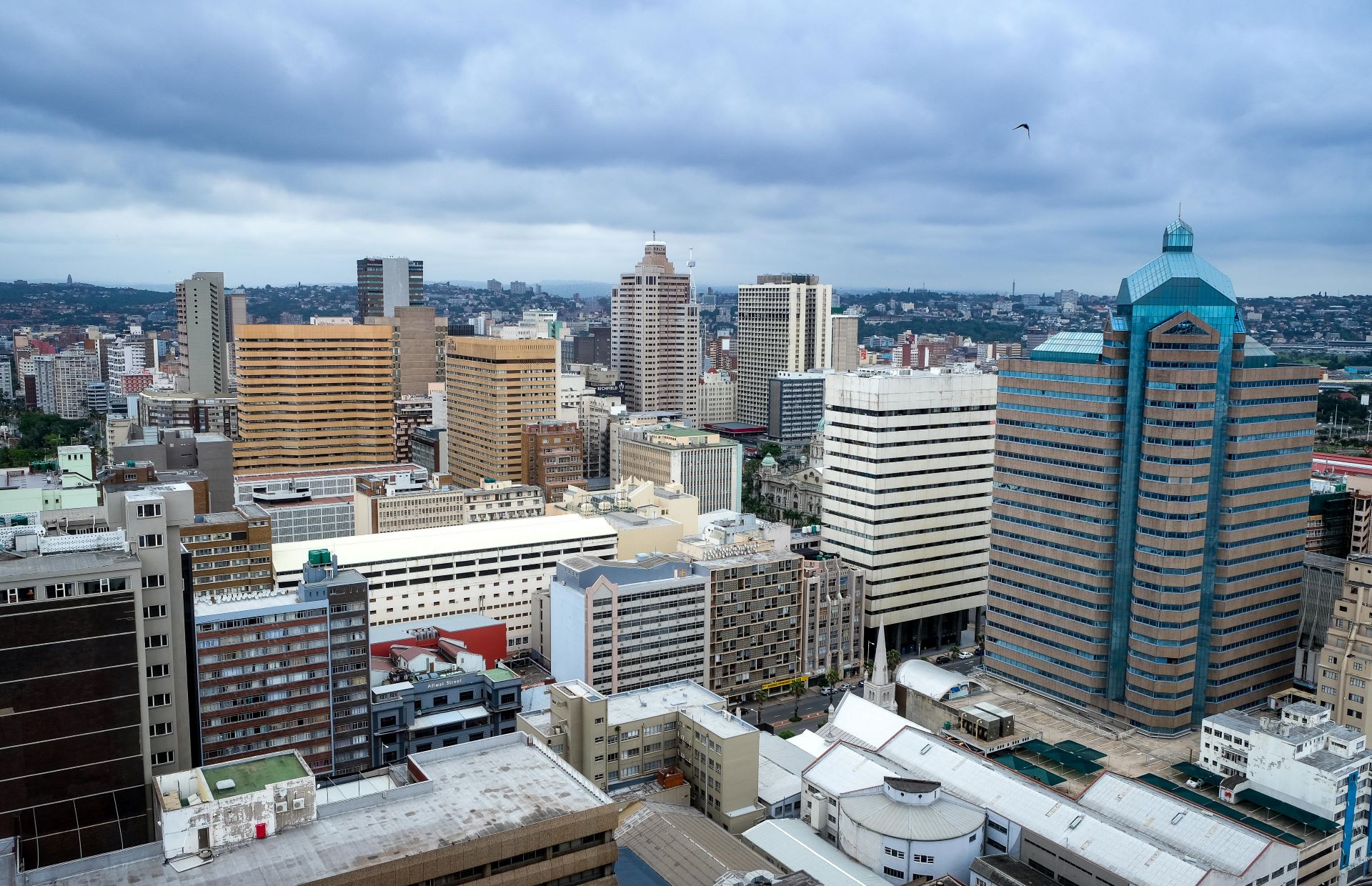
Energy Efficiency Upgrades for Durban Offices
Rising Energy Costs Are Reshaping Durban Workspaces
Energy bills in Durban offices are no longer a background expense. They have become a central operational pressure point for building owners, facility managers, and tenants across eThekwini. As electricity tariffs continue to climb and grid instability remains a reality in South Africa, commercial buildings are being forced to rethink how energy is consumed, controlled, and conserved.
In office environments, energy use is dominated by three major systems: lighting, air conditioning, and building envelope performance. These are also the easiest areas to upgrade without full-scale redevelopment. The result is a growing shift toward targeted, high-impact efficiency improvements that reduce operational costs while improving occupant comfort.
Durban adds its own layer of complexity. Coastal humidity, warm seasonal temperatures, and salt-laden air place additional strain on mechanical systems. Without intervention, offices end up overworking HVAC units, leaking conditioned air, and burning electricity at inefficient rates.
Energy efficiency is no longer a “green building bonus.” In Durban, it is a financial survival strategy.
LED Lighting Systems That Cut Waste at the Source
Lighting is often the simplest entry point for energy efficiency upgrades, yet it is still one of the most overlooked in older office buildings across Durban’s CBD, Umhlanga Ridge, and industrial-adjacent commercial zones.
Many existing offices still rely on fluorescent tubes, halogen fittings, or outdated compact fluorescents. These systems consume significantly more electricity than modern LED alternatives while producing excess heat that further increases cooling demand.
LED retrofits reduce energy consumption immediately, but the real advantage lies in system design rather than just bulb replacement. Modern LED office upgrades include:
• Daylight-responsive controls that adjust brightness based on natural light levels
• Occupancy sensors that prevent energy waste in empty meeting rooms
• Zoned lighting layouts that allow selective activation instead of full-floor usage
In Durban’s climate, reducing lighting heat output also reduces HVAC load. That means every LED upgrade has a double effect: lower lighting costs and reduced cooling demand.
A recent trend among Durban-based office refurbishments is the adoption of low-glare LED panel systems that improve visual comfort in open-plan workspaces. This is particularly effective in buildings with large glass façades where sunlight exposure fluctuates throughout the day.
The result is not just lower bills, but a more stable and productive indoor environment.
Insulation and Building Envelope Improvements
While lighting upgrades are quick wins, insulation improvements are the long-term stabilisers of energy efficiency in Durban office buildings.
Many commercial properties in the city were constructed before energy efficiency standards became a major design consideration. As a result, they often suffer from:
• Heat gain through uninsulated roofing structures
• Air leakage around windows and curtain walls
• Poor thermal resistance in internal partitioning systems
In Durban’s coastal climate, this translates into constant HVAC strain. Air conditioners work harder to counteract heat intrusion and humidity infiltration, leading to higher energy consumption and faster equipment wear.
Roof insulation upgrades are among the most effective interventions. Installing reflective insulation layers or modern thermal barrier systems reduces heat absorption during peak daytime hours. This is especially relevant in flat-roof commercial buildings commonly found in Durban’s business districts.
Window systems also play a significant role. Older single-glazed glass systems allow excessive heat transfer, forcing HVAC systems to compensate continuously. Upgrading to double-glazed or low-emissivity (Low-E) glass significantly reduces this thermal load while improving acoustic comfort in busy urban environments.
Sealing air leakage points is another high-impact but low-visibility upgrade. These include:
• Gaps around window frames
• Unsealed service penetrations
• Inefficient door systems in high-traffic office areas
When these issues are addressed together, the building behaves less like a sieve and more like a controlled environment. That stability is what ultimately reduces energy waste.
HVAC Upgrades: The Largest Opportunity for Savings
In most Durban office buildings, HVAC systems account for the largest share of electricity consumption. They are also the most complex and therefore the most important to modernise strategically.
Outdated systems often operate at fixed output levels, meaning they cool or heat spaces regardless of occupancy or actual demand. This leads to constant overconsumption, especially in buildings with fluctuating occupancy patterns.
Modern HVAC upgrades focus on adaptability and intelligence. Key improvements include:
• Variable refrigerant flow (VRF) systems that adjust output per zone
• Inverter-driven compressors that modulate energy use instead of switching fully on or off
• Demand-controlled ventilation that adjusts fresh air intake based on occupancy levels
These systems are particularly effective in Durban offices where humidity levels fluctuate throughout the day. Properly designed HVAC upgrades remove excess moisture while maintaining thermal comfort, reducing the need for overcooling.
Preventative maintenance also plays a critical role. Dirty filters, blocked coils, and poorly calibrated thermostats can increase energy consumption dramatically without any visible signs. Regular servicing ensures systems operate at designed efficiency levels.
In larger commercial buildings, integrated building management systems (BMS) are becoming more common. These systems allow centralised monitoring and control of HVAC performance, lighting schedules, and energy usage patterns. Over time, this data-driven approach allows facility managers to fine-tune consumption and identify inefficiencies before they become costly problems.
Durban’s Climate Factor: Why Efficiency Matters More Here
Durban’s subtropical climate creates a unique energy profile for office buildings. High humidity levels mean that air conditioning systems are not only cooling air but also dehumidifying it. This dual function increases energy demand significantly compared to drier South African cities.
Salt in the coastal air also accelerates corrosion in external HVAC units and mechanical systems. Without regular maintenance and protective upgrades, efficiency declines over time, even if the system was originally high quality.
This makes Durban offices particularly sensitive to small inefficiencies. A minor insulation gap or slightly underperforming HVAC unit can translate into disproportionately high energy costs.
As energy prices rise, these inefficiencies compound quickly. What was once an acceptable operational cost becomes a long-term financial drain.
Integrated Energy Efficiency Strategy for Offices
The most effective approach to energy efficiency in Durban office buildings is not isolated upgrades, but integrated planning across systems.
LED lighting reduces heat load. Improved insulation stabilises internal temperatures. HVAC upgrades respond to reduced demand and operate more efficiently. When these systems are aligned, the building transitions from reactive energy consumption to controlled energy performance.
A practical upgrade sequence often begins with lighting retrofits, followed by insulation improvements, and then HVAC optimisation. This staged approach minimises disruption while delivering measurable savings at each step.
Facility managers are increasingly treating energy efficiency as an ongoing maintenance cycle rather than a once-off renovation. This shift is critical in ensuring long-term performance and cost control.
The Financial Logic Behind Efficiency Investment
While energy efficiency upgrades require upfront capital, the return on investment is increasingly compelling in Durban’s commercial property market.
Reduced electricity consumption leads to immediate operational savings. Improved HVAC efficiency extends equipment lifespan, reducing replacement frequency. Better insulation reduces peak load demand, which can also help manage tariff-based billing structures.
Over time, these savings compound. In many cases, efficiency upgrades pay for themselves through reduced utility bills alone, without factoring in increased tenant satisfaction or improved building valuation.
For landlords and developers, energy-efficient offices are also becoming more attractive to tenants who are under their own cost pressures. Efficiency is no longer just a technical upgrade; it is a competitive advantage in the leasing market.
Building Smarter Offices for a High-Cost Energy Future
Durban’s commercial office sector is entering a phase where energy performance is as important as location, design, or aesthetics. Rising electricity costs are reshaping how buildings are operated and maintained.
LED systems, insulation upgrades, and modern HVAC technologies form the backbone of this transition. When implemented together, they create office environments that are more stable, more comfortable, and significantly more cost-efficient.
The direction is clear. Offices that ignore energy efficiency will continue to absorb rising operational costs. Those that invest strategically will move toward long-term resilience in a challenging energy landscape.