
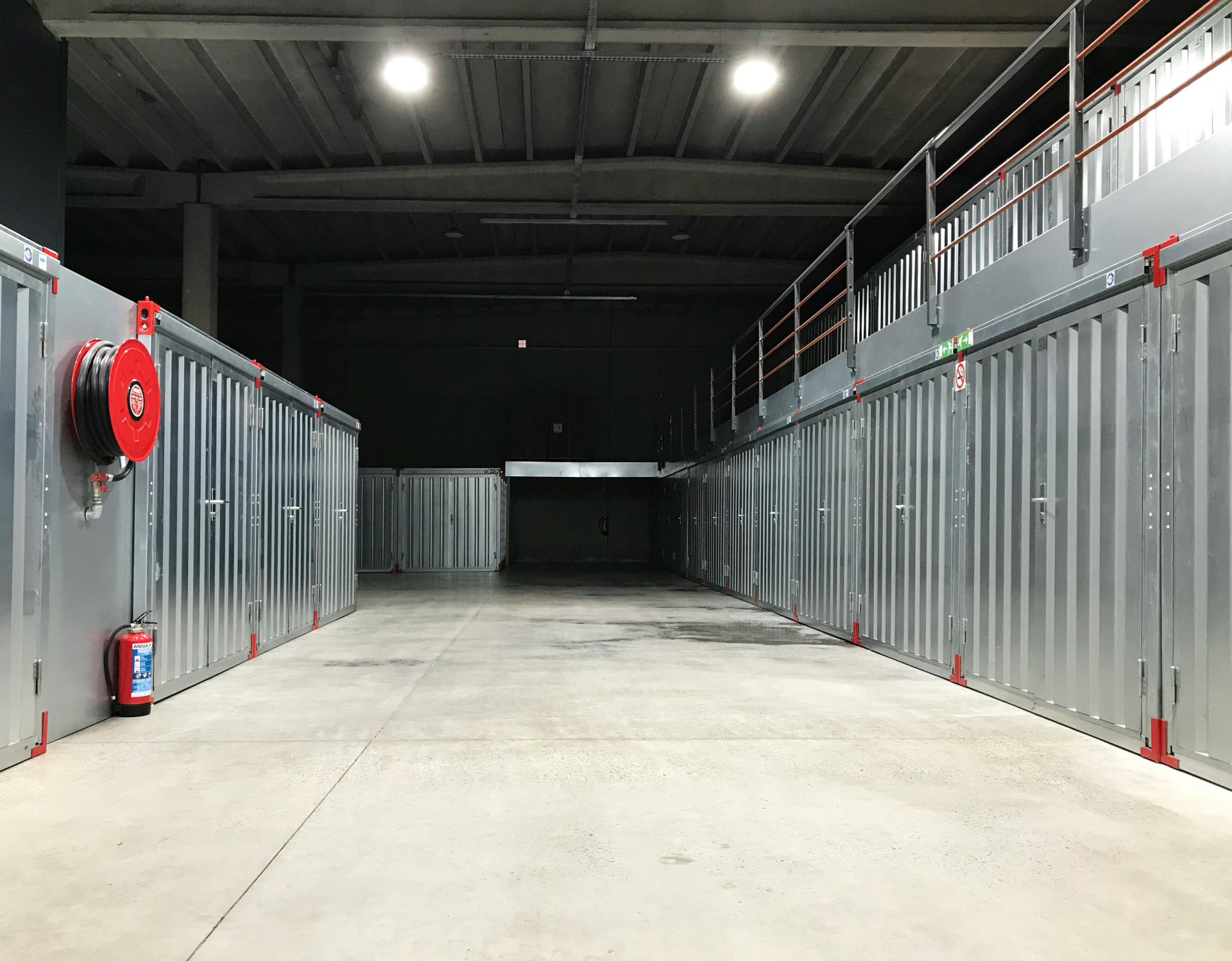
Building Durable Storage Units in Durban’s Industrial Zones
Understanding Durban’s Industrial Climate
Durban’s industrial areas, from the logistics hubs near the Port of Durban to the manufacturing belts in Prospecton and Springfield, operate under a unique environmental pressure. The city’s coastal position means warm, moisture-laden air is a constant companion. Relative humidity levels frequently sit high enough to quietly attack stored goods, steel components, packaging, and even concrete itself.
In an industrial storage unit, humidity is not an abstract weather statistic. It is condensation forming on roof sheeting at dawn. It is cardboard cartons losing rigidity. It is corrosion blooming on fasteners. It is mould taking hold in forgotten corners. For developers, contractors and property owners, ignoring humidity in Durban is not a minor oversight. It is a structural and financial liability.
When designing storage units in these zones, ventilation and slab vapour control must be treated as primary design drivers, not optional extras. They form the backbone of long-term durability and tenant satisfaction.
Humidity and Its Impact on Stored Materials
Humidity influences storage performance in three main ways: condensation, absorption and chemical reaction.
Condensation occurs when warm, moist air contacts cooler surfaces such as metal roofing sheets or uninsulated wall panels. Overnight temperature drops in Durban can be sufficient to trigger condensation on the underside of roof cladding. Without proper ventilation or insulation, droplets fall directly onto goods below.
Absorption is slower but equally destructive. Timber pallets absorb moisture and warp. Paper-based packaging softens. Textile goods develop odours. Even certain plastics degrade when exposed to persistent high moisture conditions.
Chemical reaction is most visible in corrosion. Steel shelving, tools, automotive parts and industrial components begin to oxidise faster in coastal air. Salt content in the atmosphere near port areas accelerates this process.
A storage unit that does not manage humidity effectively becomes a breeding ground for deterioration. In industrial zones where tenants may store anything from automotive components to bulk food products, this risk translates into financial exposure for landlords.
Site Planning in Durban’s Industrial Areas
Before a slab is cast or a steel frame erected, site planning must account for local conditions.
Industrial land in Durban often sits on reclaimed or low-lying terrain. Areas close to the harbour or river systems may have high water tables. Subsoil moisture can migrate upward through concrete slabs if not properly controlled.
Proper site preparation begins with soil investigation. Geotechnical testing identifies moisture levels, soil type and bearing capacity. In high water table areas, additional subsoil drainage or raised slab designs may be necessary.
Surface drainage around the building is equally critical. Finished ground levels must slope away from the structure to prevent ponding. Stormwater systems should be sized to handle heavy rainfall events typical of KwaZulu-Natal’s summer storms.
Ignoring external water management while focusing only on internal ventilation is a half-measure. Moisture control begins outside the building envelope.
##Designing the Concrete Slab with Vapour Barriers
The concrete slab is often underestimated in storage unit construction. Yet it is one of the primary pathways for moisture intrusion.
Concrete is porous. Without a vapour barrier, ground moisture migrates upward through capillary action. Over time, this can lead to damp patches, floor coating failures, mould growth and damage to goods stored directly on the slab.
In Durban’s humid climate, a high-quality vapour barrier beneath the slab is non-negotiable.
Subgrade Preparation
Subgrade preparation must be meticulous. After excavation and compaction, a well-graded layer of crushed stone is placed to create a stable base. This layer assists with drainage and provides a smooth platform for the vapour barrier.
Compaction should meet specified density requirements to prevent differential settlement. Uneven settlement can crack slabs and compromise the vapour barrier integrity.
Selecting the Vapour Barrier
For industrial storage units, a heavy-duty polyethylene vapour barrier with adequate thickness and low permeability rating is recommended. Thin membranes are prone to puncture during construction.
The membrane should be laid continuously across the slab footprint with sealed overlaps. Joints must be taped using compatible sealing tape to prevent moisture migration through seams.
Penetrations for services require careful detailing. Pipes and conduits passing through the slab should be sealed tightly to the vapour barrier using appropriate collars or sealants.
In high-risk zones near the coast, some developers opt for enhanced vapour control systems with reinforced membranes. The marginal cost increase during construction is far lower than the expense of remedial works later.
Slab Thickness and Reinforcement
Industrial storage units may accommodate heavy racking systems and forklift traffic. Slab thickness and reinforcement must be engineered accordingly.
While structural performance is the primary consideration, durability in a humid environment also matters. Proper concrete mix design with appropriate water-cement ratio reduces permeability. Additives can enhance moisture resistance.
Control joints must be correctly spaced and sealed to limit cracking. Cracks become entry points for moisture and compromise vapour control.
Ventilation Strategies for Industrial Storage Units
If the slab is the shield from below, ventilation is the lungs of the building.
Durban’s humid air cannot be eliminated, but it can be managed. Effective ventilation reduces condensation risk and stabilises internal conditions.
Ventilation strategies fall into two broad categories: passive and mechanical.
Passive Ventilation Design
Passive systems rely on natural air movement driven by temperature differences and wind pressure.
Ridge vents combined with low-level wall inlets create a stack effect. Warm, moist air rises and exits through the ridge, drawing in cooler air at lower levels. In Durban’s climate, this can significantly reduce moisture build-up under roof sheeting.
Roof design should incorporate adequate overhangs and weather protection to prevent rain ingress through ventilation openings.
Louvers installed on opposite walls encourage cross-ventilation. Orientation of the building relative to prevailing winds enhances effectiveness. In many Durban industrial zones, coastal breezes can be harnessed to assist airflow.
However, passive systems must be carefully balanced. Excessive ventilation can introduce more humid air than is expelled, especially during peak summer humidity. Design calculations should consider seasonal variations.
Mechanical Ventilation and Extraction
For higher-value goods or more sensitive storage, mechanical ventilation provides greater control.
Roof-mounted extract fans can continuously remove moist air. Wall-mounted supply fans introduce filtered air. Systems can be automated using humidity sensors to activate when internal levels exceed set thresholds.
In some cases, dehumidification systems may be integrated. While more costly, they provide precise humidity control for specialised storage such as pharmaceuticals or electronics.
Electrical design must accommodate these systems, and maintenance planning is essential. A non-functional fan in Durban’s climate quickly reveals itself in condensation streaks and musty odours.
Roofing Systems and Condensation Control
The roof is often the coldest internal surface at night. Condensation frequently forms on the underside of metal sheeting.
Insulated roof panels reduce temperature differentials and limit condensation. Alternatively, anti-condensation fleece membranes can be installed beneath sheeting to absorb and gradually release moisture.
Correct installation is crucial. Gaps in insulation create cold bridges where condensation will concentrate. Fasteners and penetrations should be properly sealed to prevent water ingress during heavy storms.
In coastal industrial areas, corrosion-resistant roofing materials should be specified. Galvanised or coated steel with appropriate marine-grade protection extends lifespan.
Wall Construction and Moisture Resistance
Wall systems in Durban’s industrial storage units typically consist of concrete blockwork, tilt-up panels or steel cladding.
Concrete and masonry walls must be properly damp-proofed. External coatings can reduce moisture absorption during heavy rains.
Steel cladding systems require careful detailing at joints and base connections. Flashings must direct water away from the building envelope. Sealants should be selected for durability in high UV and humidity conditions.
Internally, finishes should resist mould growth. Smooth, washable surfaces simplify maintenance and inspection.
Floor Finishes and Internal Detailing
Even with a vapour barrier, surface finishes matter.
Epoxy floor coatings provide a sealed surface that resists moisture penetration and simplifies cleaning. They also reflect light, improving visibility within large storage spaces.
Shelving systems should be elevated slightly above floor level to allow airflow. Storing goods directly against external walls should be avoided, as these areas are more prone to condensation.
Regular maintenance inspections are essential. Early signs of dampness or coating failure must be addressed promptly to prevent escalation.
Maintenance Planning in Durban’s Climate
Construction decisions only succeed when paired with consistent maintenance.
Ventilation systems require periodic inspection and cleaning. Dust and debris can restrict airflow. Extract fans must be tested to ensure operational reliability.
Roof inspections should occur before and after the rainy season. Blocked gutters and downpipes can lead to water overflow and wall dampness.
Internal humidity monitoring provides valuable data. Simple digital hygrometers placed at various points within the storage unit allow owners to track trends and respond proactively.
Preventative maintenance budgets should account for the coastal environment. Corrosion, sealant degradation and wear occur faster in Durban than in inland regions.
Compliance and Local Considerations
Storage unit construction in Durban must comply with national building regulations and local municipal requirements.
Fire safety, structural integrity and accessibility remain fundamental. However, moisture management intersects with compliance in areas such as health regulations when storing food products.
Developers working near the Port of Durban must also consider exposure classifications for materials due to salt-laden air.
Engaging experienced local engineers and contractors ensures that design solutions reflect real-world coastal performance rather than generic inland standards.
Future-Proofing Industrial Storage Investments
Industrial property in Durban continues to grow, driven by logistics, manufacturing and trade. Well-designed storage units command stronger rental returns and lower maintenance costs.
Investing in robust vapour barriers and intelligent ventilation is not simply about preventing damp patches. It is about protecting tenant goods, reducing disputes, and preserving asset value.
In a city where humidity is as persistent as the tide, storage units must be built with respect for the climate. The concrete slab must resist moisture rising from below. The roof and walls must manage condensation. The ventilation system must keep air moving and balanced.
When these elements work together, a storage unit becomes more than a steel shell on a slab. It becomes a controlled environment, resilient against Durban’s coastal humidity and ready to serve industry for decades.